
Emergency Management Case Study
Remit
The remit of this case study demonstrates how social listening can be leveraged within an emergency management use case.
The Topic
This case study demonstrates how an emergency management agency utilised social listening to understand community sentiment during a natural disaster period.
Purpose
Demonstrate, using the 2025 Severe Tropical Cyclone Alfred as an example, how social listening can be applied in an emergency management situation.
Contextualise how real-time analysis and situational awareness can inform an emergency response.
Background
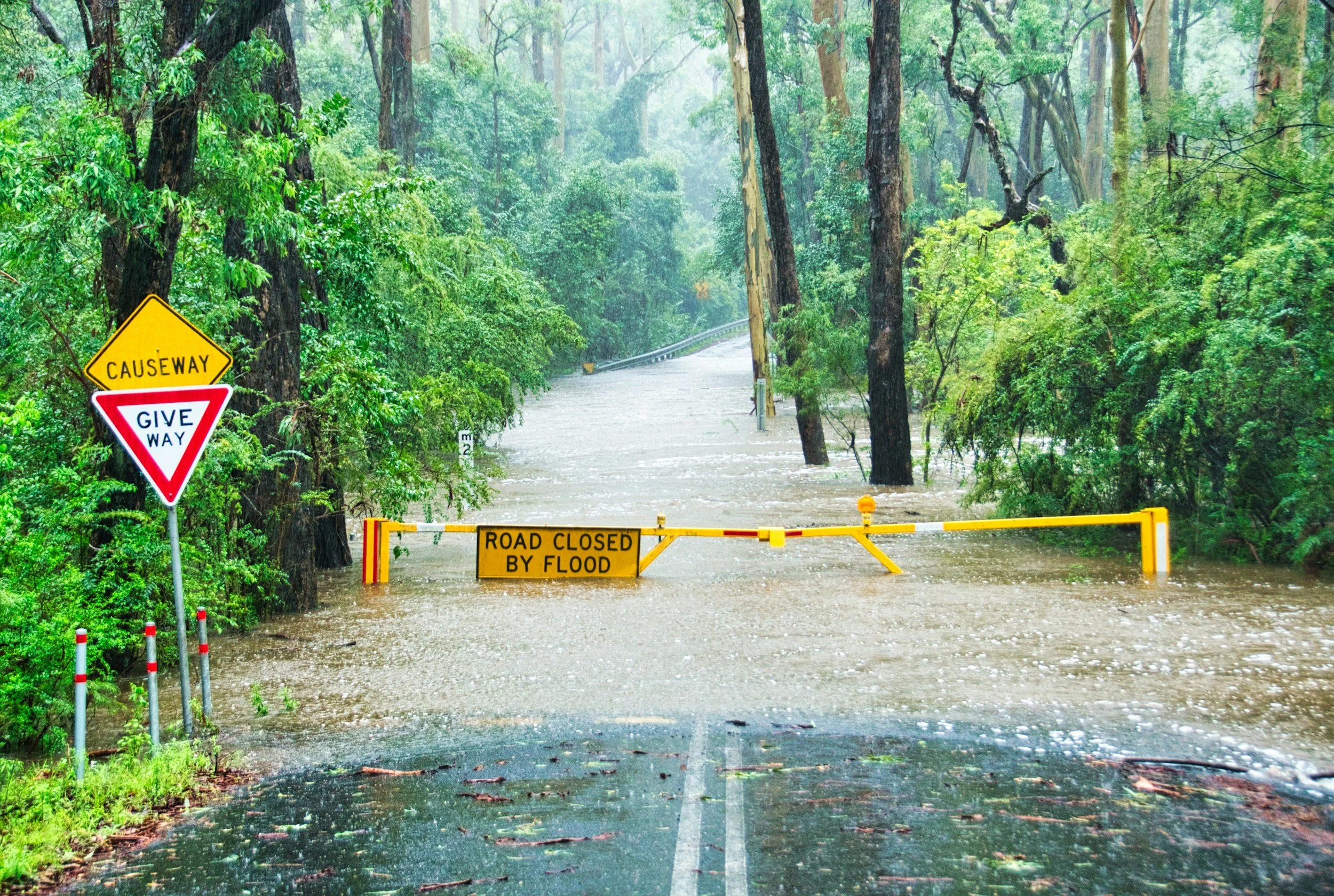
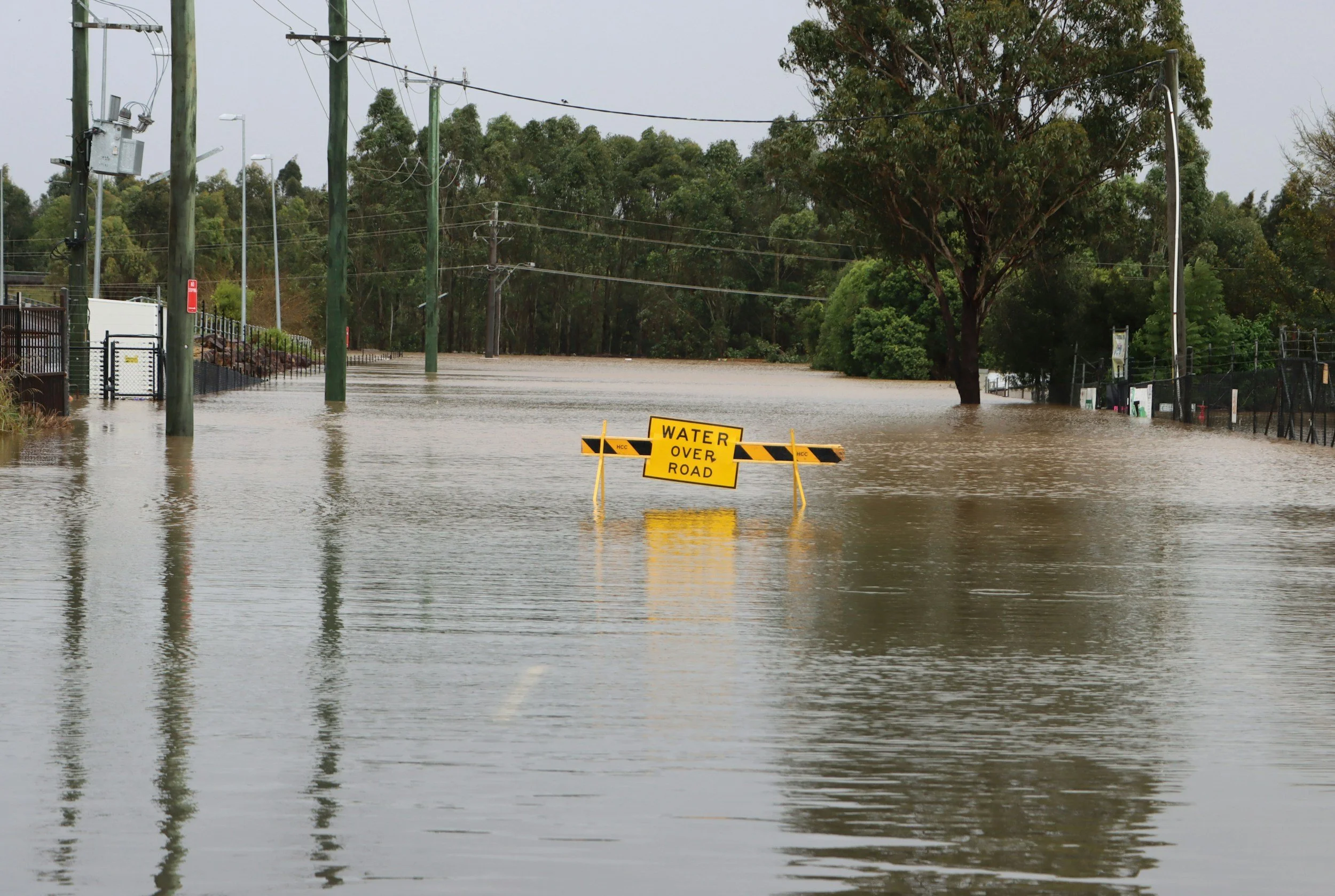
Severe Tropical Cyclone Alfred (Cyclone Alfred) was active between the 21st of February and the 8th of March 2025, impacting southeastern Queensland and northeastern New South Wales. Damaging wind gusts and heavy rainfall resulted in severe damage and widespread riverine and flash flooding. This period saw sustained collaboration between both federal authorities and state emergency services, with one of these agencies leveraging social listening to enable operational success.
The Challenge
The agency faced several operational hurdles throughout this time. As a provider of strategic oversight during periods of national emergency, they required a means to manage and interpret large amounts of real-time data from diverse sources. This included discourse and sentiment data obtained through social media intelligence (SOCMINT) as well as the incorporation of such data into disaster relief and management cycles. The volume of this data, spread across multiple online sources, made traditional analyst-driven collection methods insufficient to meet operational needs, requiring an ability to collect data at scale.
The Application
Social listening was deployed as part of an integrated open-source intelligence (OSINT) solution throughout the crisis. This included the collection and centralisation of publicly and legally accessible data, which was used to inform predictive insights, increase situational awareness, and identify emergency flashpoints. Extracted in real-time, these insights further enhanced organisational reporting abilities and capacity to forecast potential developments throughout the period of a national emergency. The three key areas of focus were environmental monitoring, misinformation, and situational awareness.
Environmental Monitoring
This included the integration of SOCMINT and geospatial tools for targeted, localised social listening that supported recovery planning strategy. This was achieved through message location attribution which, when applied as part of a layered approach, incorporating mapping data could be used to identify crisis hotspots, determine damage severity within a particular area and inform subsequent recovery efforts.
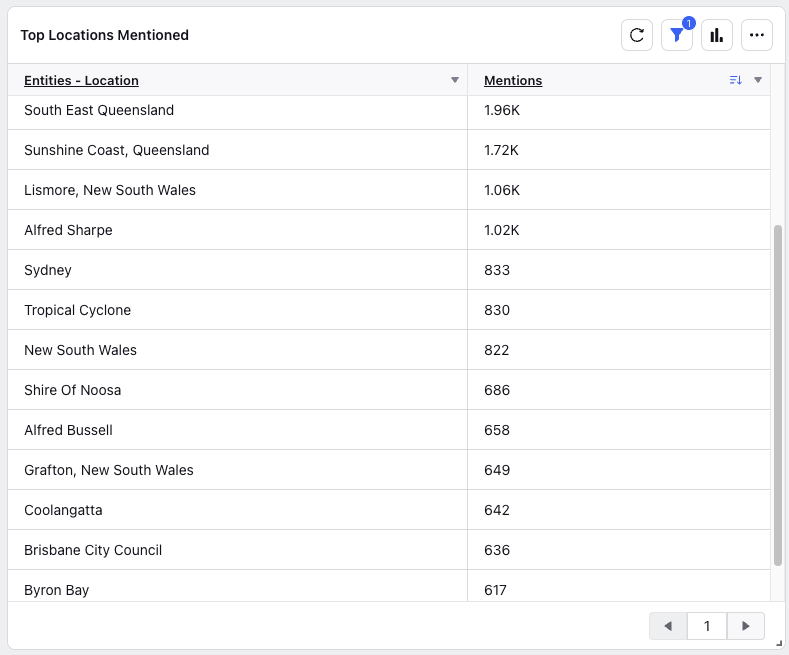
Conversation volume by mentioned locations. These insights provided an overview of discourse volume among impacted locations and severity, allowing the agency to respond accordingly.
Misinformation
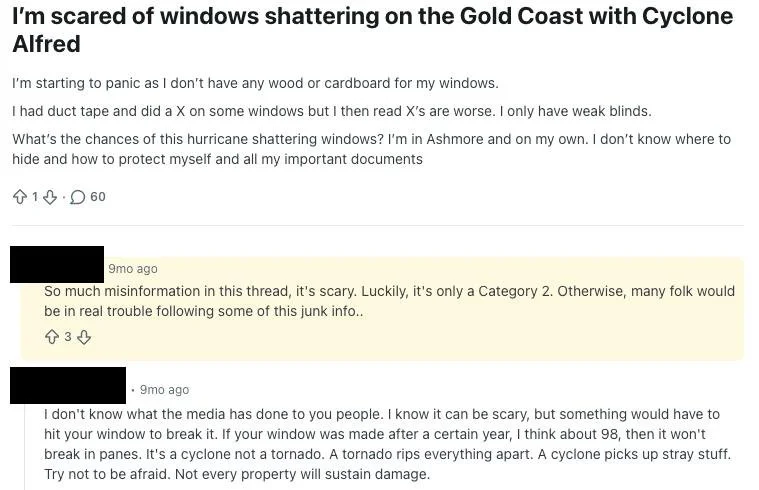
Incorporation of SOCMINT into response approaches enabled the expedient surfacing and triage of misinformation throughout the crisis, enabling targeted and informed counter messaging. Social listening provided the capability for the organisation to distinguish credible information from misleading narratives during a high period of uncertainty, enabling timely responses to public concerns.
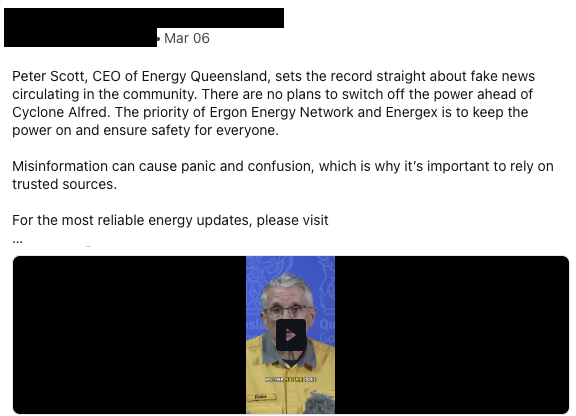
Posts addressing misinformation which circulated during the crisis.
Situational Awareness
Utilisation of SOCMINT strengthened situational awareness through the acquisition of publicly and legally accessible data. Unstructured data was categorised to generate sentiment insights across key topics, including government, state and local response, community impact and emerging concerns. This supported a more timely and informed understanding of the operating environment, enabled the detection of key issues, and provided sentiment insights to reveal meaningful patterns and trends.
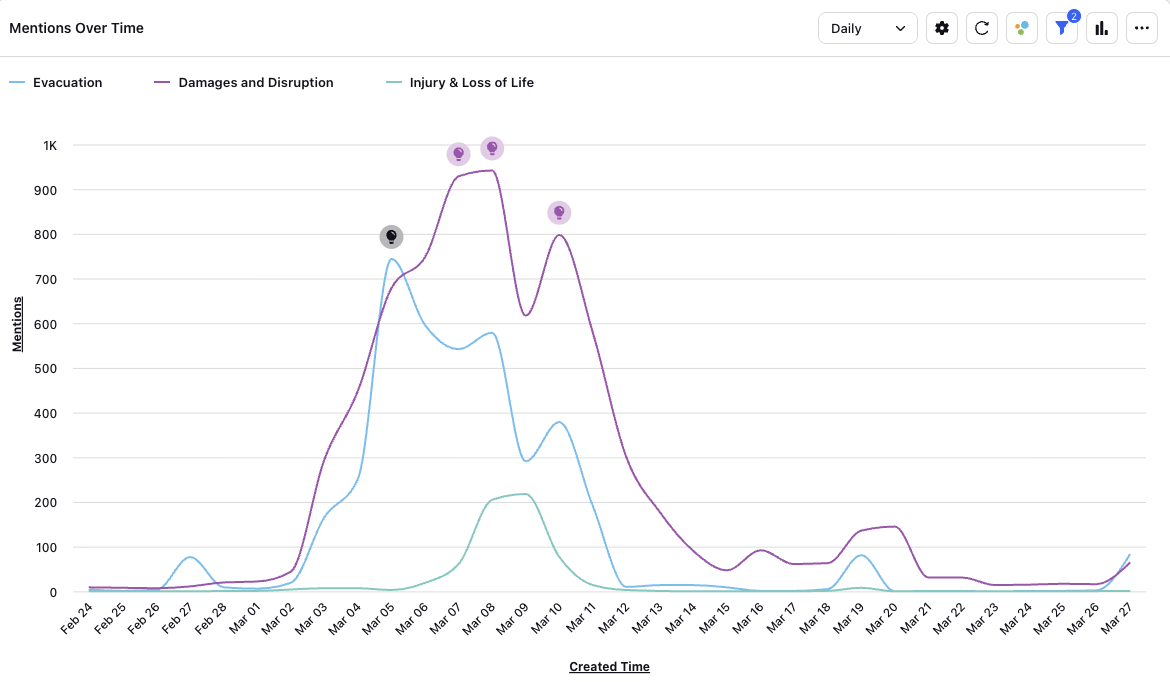
Conversation volume categorised by community impact. These insights assisted the agency in determining the prioritisation of response efforts and the focus of targeted messaging.
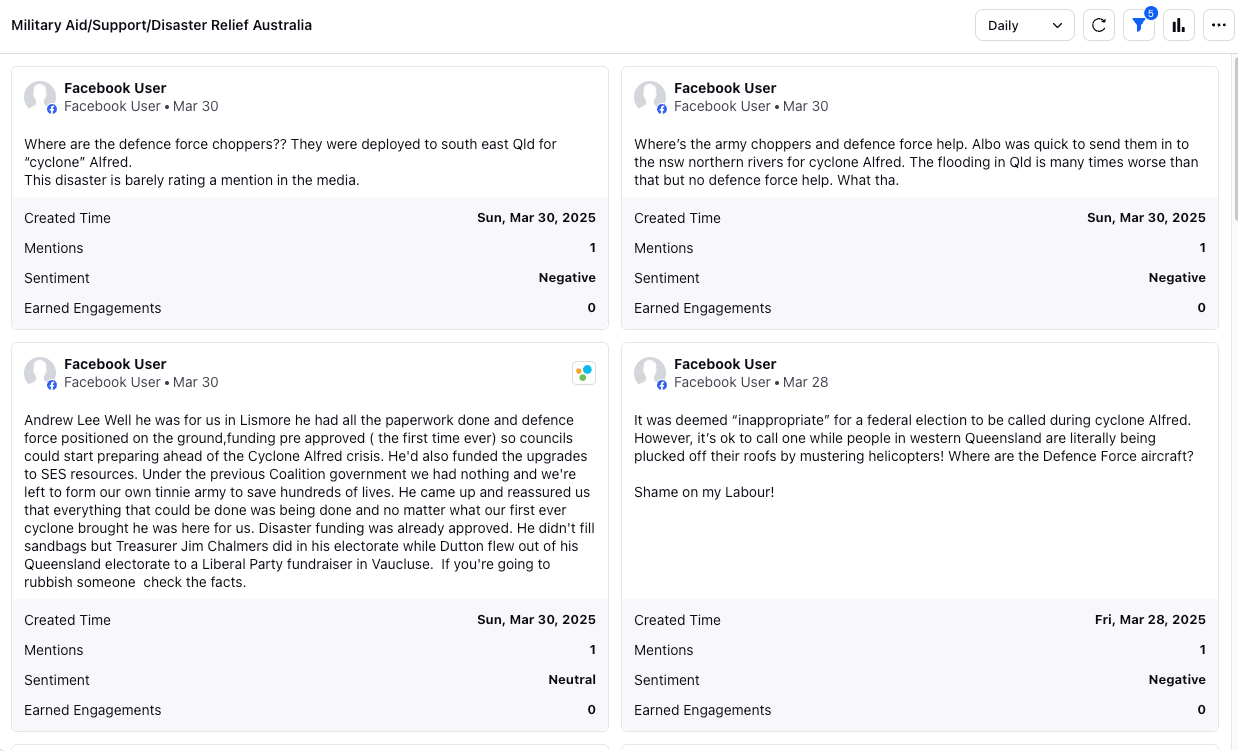
Conversations related to the deployment of military aid during the crisis. Similar categorisations also included the identification of conspiratorial or misinformation-linked content and response time criticisms among others.
Understanding Discourse Narratives
Military Aid the subject of significant attention
The organisation worked closely with the Australian Defence Force throughout the disaster to support planning and response efforts for Cyclone Alfred. While more than 1,500 ADF personnel were committed to the response, monitoring frameworks identified significant discourse suggesting a perceived lack of ADF involvement in the crisis. Approximately 191 messages referenced this narrative across the monitoring period, including claims of political motivations resulting in a lack of ADF presence and perceived preferential treatment for certain regions.
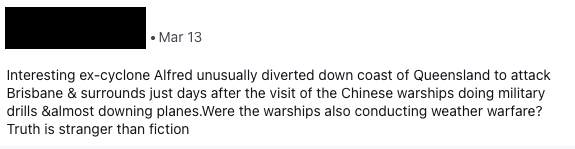
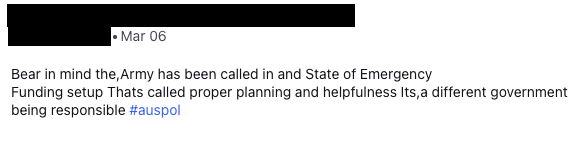
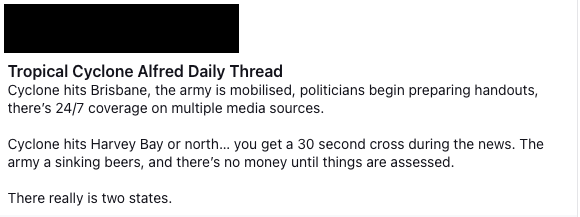
Comments linking the ADF and crisis response. Note the political themes within these messages.
A substantial amount of politically charged discourse
With the disaster occurring in the lead-up to a federal election, a significant volume of online conversation referenced the actions of key candidates and their respective parties. While political commentary was not a primary focus, discourse surrounding the federal government exceeded 2,100 messages.
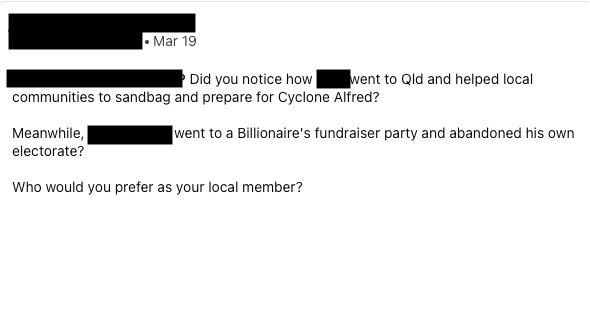
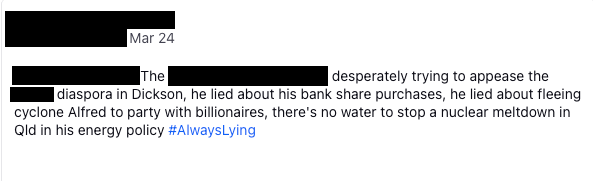
Politically charged comments detected by the monitoring dashboard.
Why It Matters
The organisation’s responsibility during times of national crisis is a high-stakes position and susceptible to significant reputational risk. This is particularly evident following instances of legal action against other government organisations such as SunWater Queensland’s alleged mishandling of the 2011 floods.
Maintaining an ability to collect publicly and legally accessible data at scale enabled the agency to identify misinformation and harmful narratives which had the potential to erode public trust in the agency. This paved the way for informed and targeted counter messaging which preserved agency reputation and image.
These insights also strengthened the agency’s ability to support the community across the disaster lifecycle. In the lead up, social media monitoring identified emerging community concerns and at-risk cohorts, enabling targeted outreach. During response and recovery, real-time sentiment and narrative analysis helped clarify evolving risks and surface community grievances, allowing the agency to adapt communication strategies and service delivery accordingly.
For stakeholders where public confidence is central to effective operations, this demonstrates the importance of proactive information monitoring and response capabilities in safeguarding institutional credibility, effectiveness, and long-term public trust during periods of heightened scrutiny.
Conclusion
The Cyclone Alfred case study demonstrates how the integration of social listening can strengthen emergency management outcomes by transforming large volumes of real-time, unstructured public data into actionable insights. Embedding SOCMINT into its preparation and response efforts enabled the agency to enhance their situational awareness, detect misinformation, identify emerging concerns and develop a better understanding of community sentiment at a time of heightened uncertainty.
This approach enabled more accurate forecasting and prioritisation of response efforts and preserved organisational trust by surfacing harmful narratives early and informing targeted counter-messaging. The deployment of social listening in this context illustrates its value as a strategic enabler of emergency management, providing a clearer, real-time picture of the operating environment and supporting the organisation’s mandate.