Remit
This case study demonstrates how social listening can surface complex online narratives driving irregular migration into Australia. Through analysing unsolicited, open-source social media discourse, agencies gain critical insight into misinformation, aspiration, and push factors influencing migration. These insights provide border and immigration authorities with enhanced situational awareness, supporting evidence-based policy, communications, and intelligence planning.
The Topic
Open-source social listening dashboards were developed using Boolean logic to monitor online discourse surrounding irregular migration conversations to Australia. The analysis focused on three key geographic regions: Southeast Asia, the Middle East, and Central America.
Using Open-Source Intelligence (OSINT) and social listening technologies, unsolicited and unstructured data was collected across public platforms, including Facebook, TikTok, X (Twitter), and regional forums such as Reddit.

Purpose
Demonstrate how social listening can reveal motivations and perceptions driving irregular migration, particularly the emotional and social dynamics influencing decision-making.
Identify and classify the dominant online narratives surrounding irregular migration into Australia.
Highlight how these insights can support Border Security operations, counter-narrative strategy, and policy formation through evidence-based understanding.

Background
Australia’s border security operations serve as the nation’s first line of defence in an increasingly digitised migration landscape. In recent years, global instability, economic hardship, and online misinformation have intensified irregular migration pressures.
Social media has transformed how migration trends develop and how potential migrants gather information. Research from Furxhi and Toromëni, who wrote “Posts and Pathways: Social Media and Migration”, indicates that digital communication channels play a pivotal role in the decision-making process, influencing both “push” factors (economic and political instability, insecurity, unemployment) and “pull” factors (education, safety, perceived quality of life).
These online exchanges amplify migration intent by combining personal anecdotes, visual storytelling, and peer influence, often creating idealised portrayals of Australia that omit practical or legal realities.
The Challenge
Traditional intelligence collection methods often struggle to capture the speed, sentiment, and scale of public discourse surrounding migration. Monitoring discourse over a three-month period, particularly conversations that vary in content and intent, presents a significant challenge due to the breadth of conversation and the analysis needed to understand the narratives they are conveying.
Without mechanisms to interpret these rapidly spreading conversations, blind spots emerge, which allow narratives of misinformation or false hope to drive vulnerable individuals to dangerous migration journeys. Social listening bridges this gap by turning public chatter into actionable foresight, allowing early detection of misinformation spikes and sentiment surges tied to migration intent.
Application of OSINT
Between July 1 2025 and October 1 2025, unsolicited, unstructured online data relating to irregular migration was collected and analysed. Using thematic clustering, sentiment analysis, and timeline correlation, analysts identified recurring topics, emotional triggers, and regional variations.
Narratives were categorised into three key types:
Push-Factor Narratives – Highlighting economic or political hardship, unemployment, and insecurity.
Misinformation-Based Narratives – Amplifying or distorting realities, often portraying Australia as lenient or easily accessible.
Hope-Based Narratives – Expressing aspirations for safety, education, and opportunity in Australia.
Each narrative type was mapped across the key focus regions — Southeast Asia, the Middle East, and Central America — and cross-referenced against concurrent geopolitical events such as visa policy changes, regional conflicts, or economic downturns.
Understanding Discourse Narratives
The three sub-narratives of misinformation, hope-based messaging and push factors were analysed, and these discussions revealed that discourse surrounding irregular migration to Australia is driven by a complex interplay of misinformation, aspiration, and desperation.
Misinformation-Based Narratives: These conversations accounted for 38.79% of total online discussions. Common claims include “safe passage”, “open borders”, and “apply for political asylum”.
Hope-Based Narratives: Predominant in Southeast Asia, especially Indonesia and Vietnam. Posts often pair personal anecdotes (“my cousin reached Sydney on a student visa”) with idealised imagery of Australian beaches or universities. This category represented 50.48% of all discussions detected.
Push-Factor Narratives: Discussions from Southeast Asia make up 95% of Push-Factor Based narratives, with these discussions containing the phrases “housing crisis”, “basic pay” and “cost of living”.
These online patterns align with findings from IOM’s World Migration Report (2024), which notes that economic precarity and misinformation co-amplify digital migration intent, particularly among younger demographics.
Visuals & Illustrations
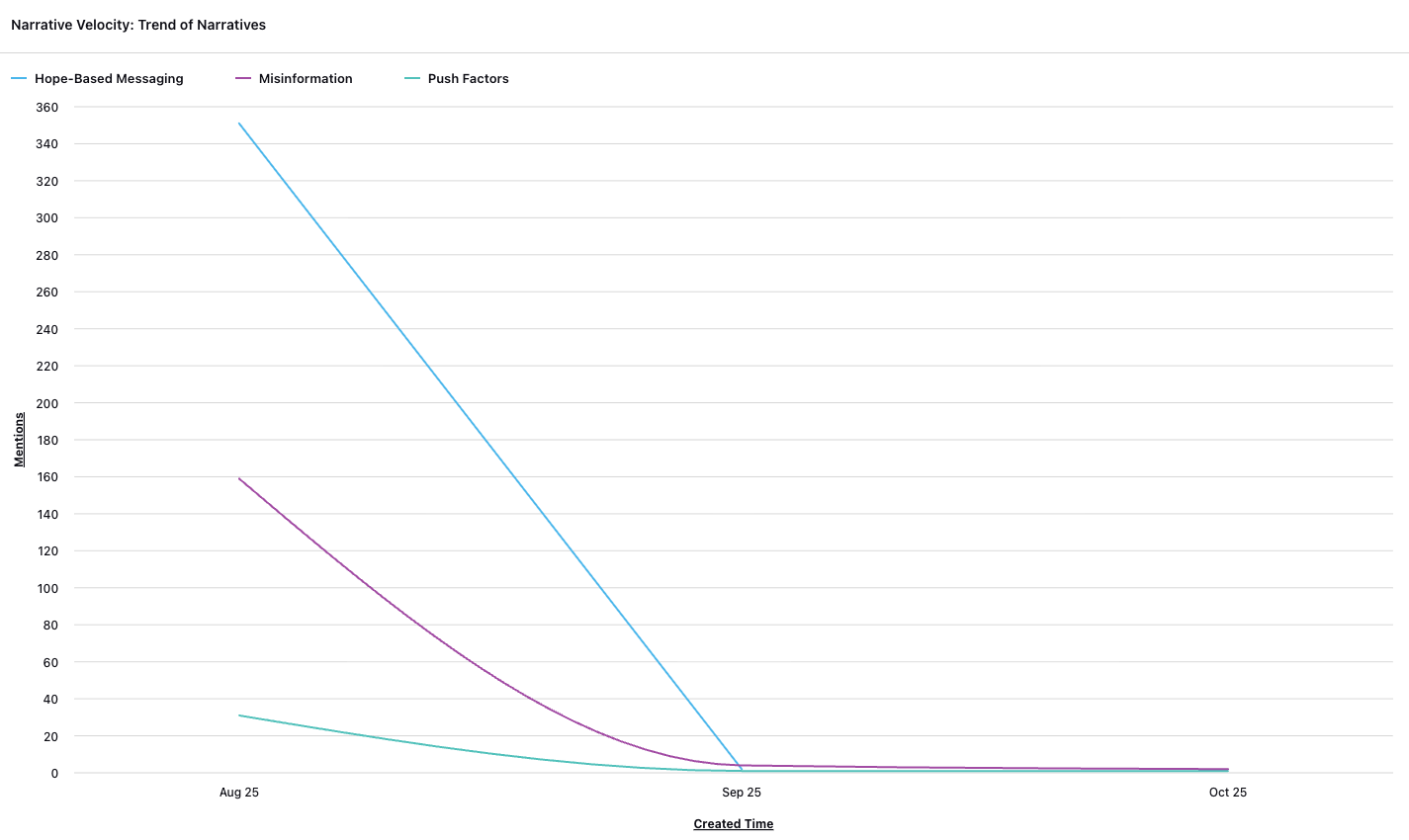
Figure 1. A line graph illustrating shifts in narrative volume related to irregular migration between late August and late September 2025, segmented into Hope-Based Messaging, Misinformation, and Push-Factor narratives. The elevated mentions in late August coincide with several geopolitical developments that intensified public discussion: ongoing instability in the Middle East following the June 2025 Iran-Israel conflict and continued violence in Gaza; the August 2025 MSF Unwelcome report detailing heightened enforcement and deteriorating conditions for Central American migrants under new US border policies; and escalating Rohingya maritime movements in Southeast Asia alongside renewed Australian-Indonesian counter-smuggling cooperation.
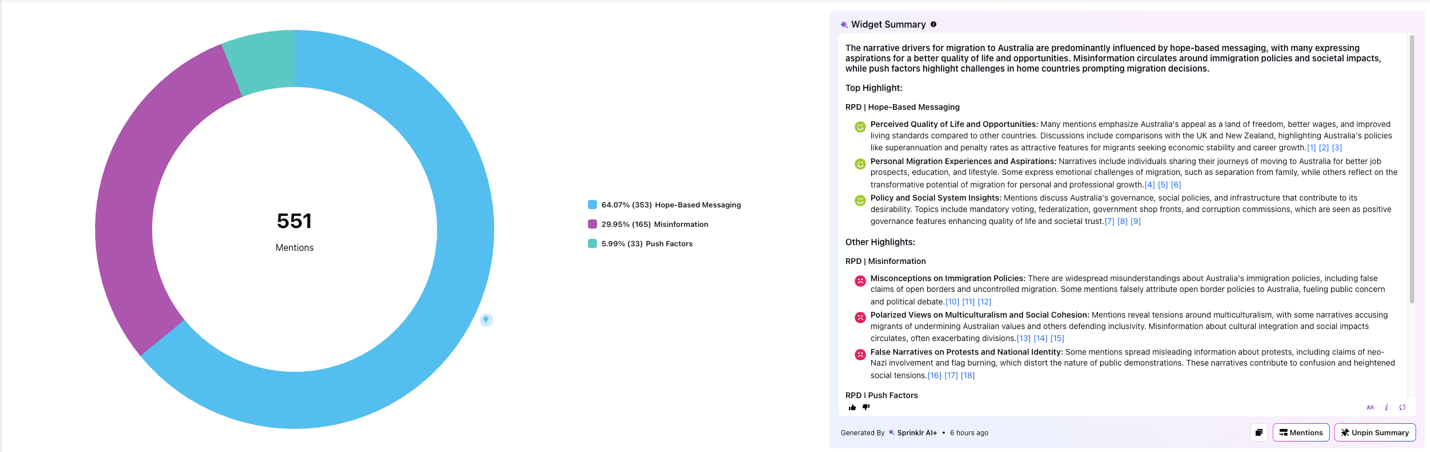
Figure 2. The pie graph highlights the percentage of each narrative in terms of volume of discussion. Hope-based messaging, making up 64% of conversations, is likely due to Australia looking to have opportunities for education and work, as well as being geographically removed from war-torn regions.
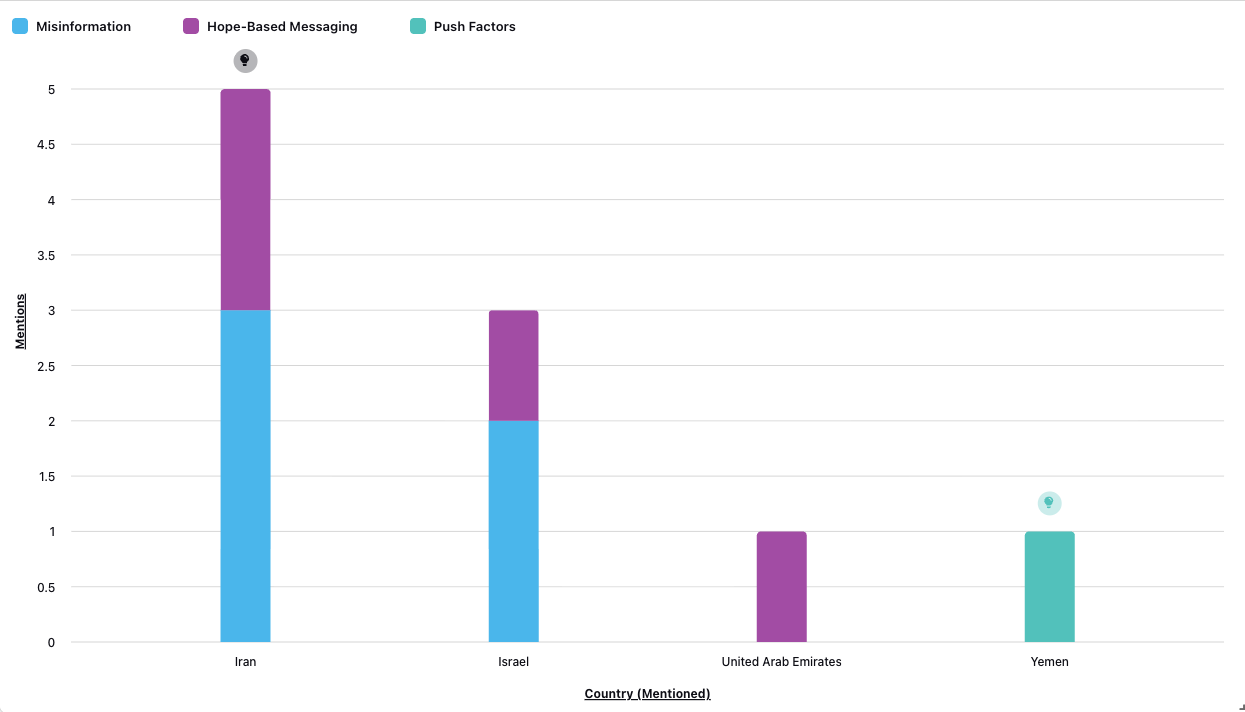
Figure 3. A bar graph showing the volume of Middle Eastern-related discussions by country, broken down by narrative type (Misinformation, Hope-Based Messaging, Push Factors). Iran records the highest number of mentions, followed by Israel and the United Arab Emirates, with Yemen appearing only within Push-Factor discourse. The distribution reflects where conversations about irregular migration were more concentrated during the reporting period.
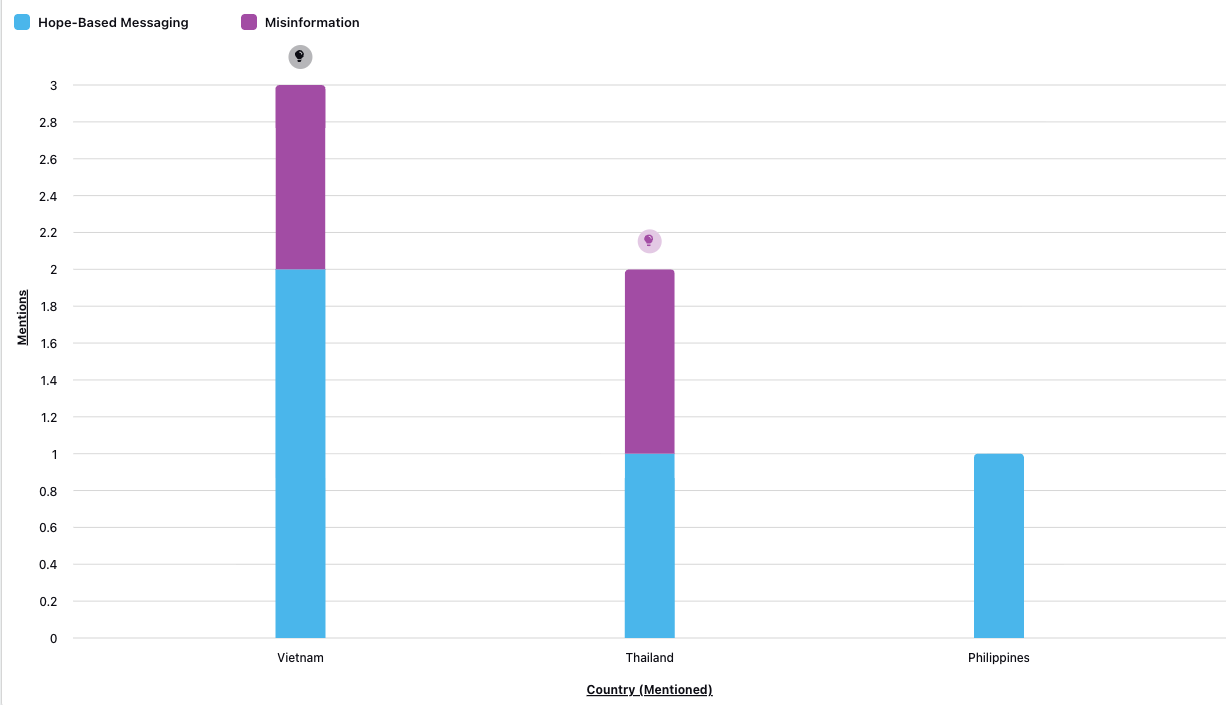
Figure 4. A bar graph visualising regional origins of discussions in Southeast Asia. Vietnam holds the highest number of discussions, surrounding misinformation and hope-based messaging. This points towards discussions of irregular migration being rooted in false ideas of what migration would achieve.

Figure 5. This conversation highlights the positive attributes of Australian society that can seem attractive to migrants, with many of the comments focusing on all the positive aspects of an Australian lifestyle. Many of these negate to mention any negative aspects, which can create a distorted view of what migrating to Australia would be like.
Why It Matters
These insights provide critical visibility into the social and psychological drivers behind irregular migration, an area that has traditionally been obscured by data silos and limited field intelligence.
Leveraging social listening to surface and monitor complex online narratives, agencies can:
Identify where and when misinformation is emerging, enabling targeted counter-messaging campaigns.
Understand what motivates irregular migration, supporting policy responses that address root causes rather than symptoms.
Develop proactive risk frameworks that anticipate shifts in migrant sentiment following geopolitical or economic changes.
Real-time social listening gives agencies an agile intelligence layer that can detect micro-trends and emerging narratives long before they surface in traditional intel cycles. This accelerates speed to insight and supports a more proactive approach to maintaining border integrity through informed prevention rather than reactive enforcement.
Conclusion
Irregular migration to Australia is driven as much by digital perception as by geopolitical reality. The integration of OSINT and social listening allows border security and immigration agencies to interpret these perceptions as early indicators of potential movement.
Embedding this capability within operational workflows enhances situational awareness, supports evidence-based policymaking, and strengthens Australia’s ability to safeguard its borders while upholding its humanitarian responsibilities.