
Threads in Australia: Should Government Social Media Teams Be Paying Attention?
It’s been a turbulent six months across the social media landscape. Platforms are shifting, audience engagement is becoming harder to earn, and the expectations placed on government communications teams continue to grow.
In Australia, several developments have reshaped the conversation:
The under-16 social media ban prompted a nationwide debate, dividing opinion between those concerned about youth safety and those worried about digital access and enforcement.
Artificial intelligence continues to reshape how content is created, distributed, and surfaced in feeds.
Platform dynamics are shifting. Advertising reach on X declined by 5.4% in Australia between late 2024 and late 2025, reflecting ongoing uncertainty around the platform’s future.
And now another platform is appearing more frequently in social media strategy discussions: Threads.
For government social media and communications teams, there is one question at the back of everyone’s minds:
“Should we be on Threads?”
This article aims to help answer that question by unpacking the current state of Threads in Australia, highlighting what makes the platform different, and outlining what communications teams should consider before adding it to their channel strategy.
The Down Low on Threads in Australia
Threads might not be mainstream in Australia just yet, but it’s not flying under the radar either.
In late 2025, around 1.35 million Australians were using Threads, representing roughly 5% of the total population and 6.4% of Australians aged 18+.
Threads Demographic Breakdown - Australia
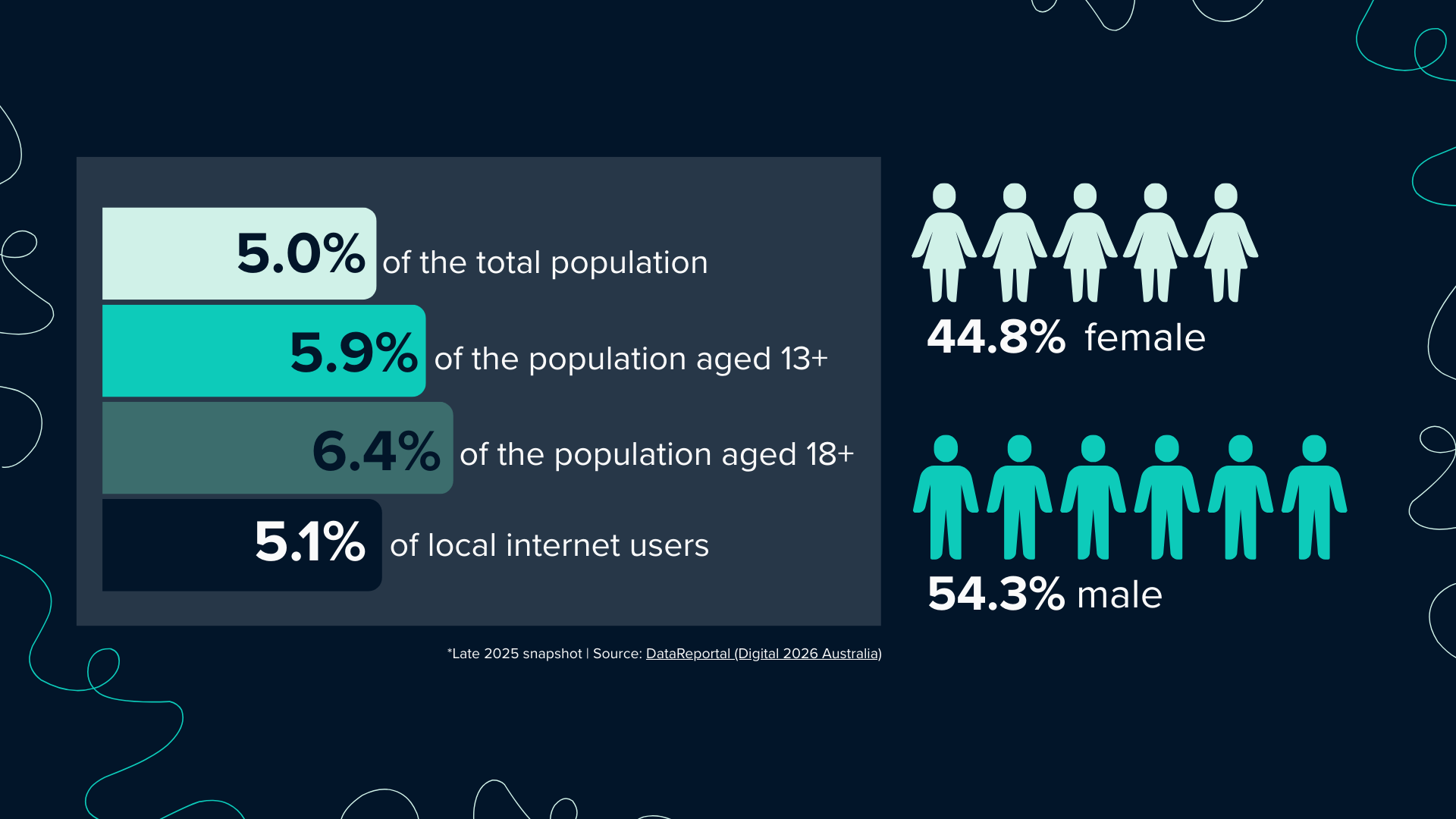
In comparison to established platforms like Instagram, Facebook, or LinkedIn, those numbers are still relatively modest. But the growth trajectory and the backing of Meta Platforms mean the platform is increasingly difficult to ignore.
Threads use vs other mainstream social media channels in Australia
Based on monthly active users from ad reach figures (excluding LinkedIn*)
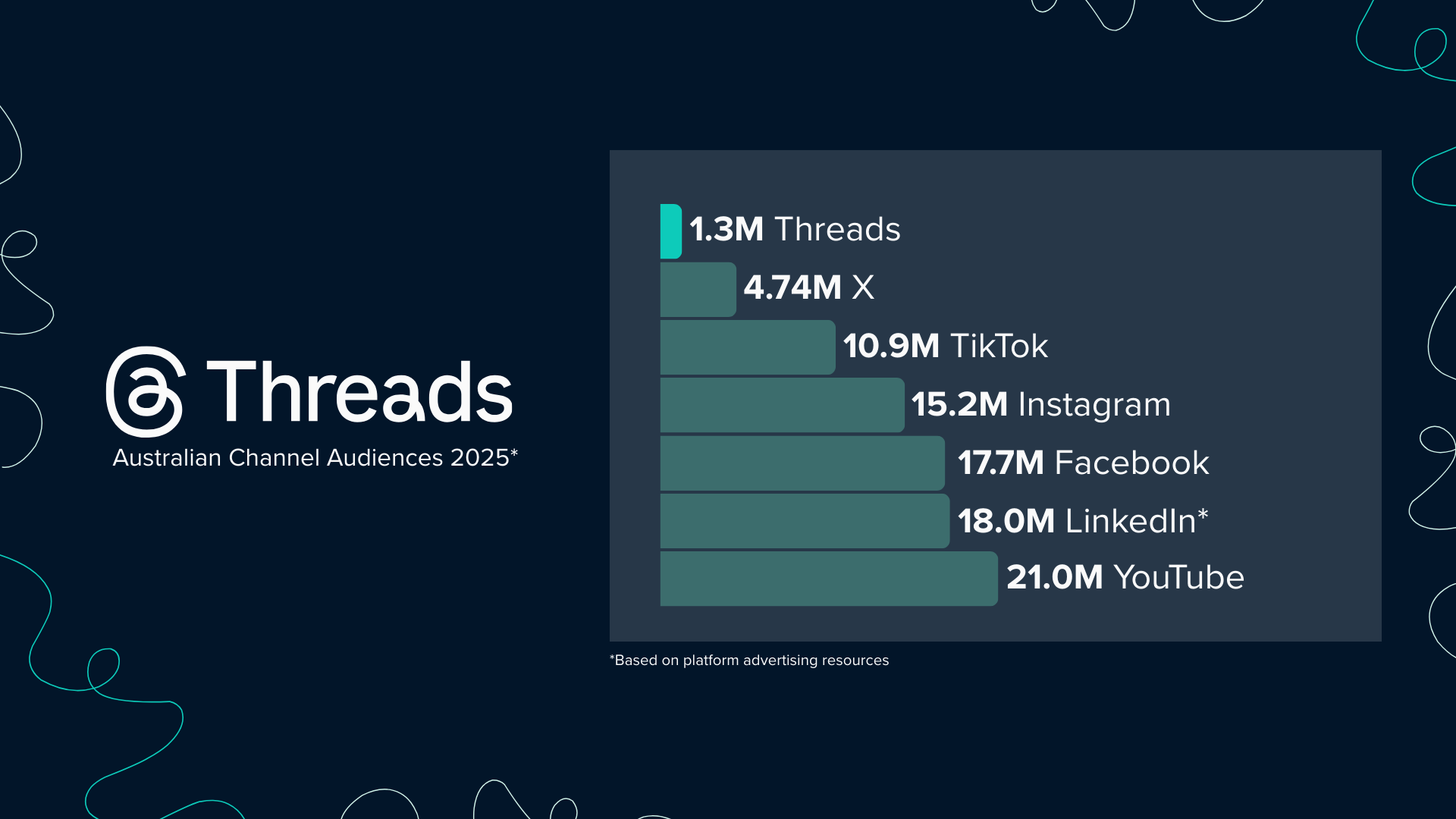
*It’s important to note that the ad reach figures of other channels (YouTube, Meta, TikTok, X,) are based on monthly active users, whereas LinkedIn’s advertising tools publish audience reach data based on total registered members, making the numbers inflated in comparison. Source: https://datareportal.com/reports/digital-2026-australia
For government communications professionals, these figures signal that though Threads may not be delivering mass reach yet, it has enough momentum to warrant consideration.
Emerging channels often move through a familiar lifecycle:
Early adopters experiment.
Audience behaviour begins to stabilise.
Brands and institutions decide whether the platform has long-term value.
Right now, Threads is sitting somewhere between stages two and three.
What Makes Threads Different?
Despite Threads launching as a companion platform to Instagram, its behaviour and culture are evolving in a distinct direction.
Three characteristics stand out.
A Text-First Platform
Unlike Instagram or TikTok, Threads is primarily text-led. Posts can include images or video, but the core format is conversational text.
For government communications teams, this opens up opportunities for:
quick updates
commentary on topical issues
conversational engagement
live event commentary
policy discussion
It feels closer in spirit to early Twitter than modern visual-first platforms.
Public Conversation
Threads encourages public dialogue. Replies and quote-style responses create visible discussions that audiences can follow.
This format can support:
public education
real-time clarification of issues
humanising institutional voices
However, it also requires careful moderation and tone management, particularly for government agencies.
Algorithmic Discovery
Like most modern platforms, Threads relies heavily on algorithmic discovery rather than purely follower-based feeds.
This means:
reach is not guaranteed
content quality and relevance matter more than audience size
new accounts can gain visibility quickly
For government teams used to predictable reach on legacy platforms, this shift requires a more experimental mindset. The silver lining here is that when a post gains momentum, there’s a greater opportunity for virality – even if your follower size is small.
Early Signals from Australian Government Accounts
Some Australian organisations have already started experimenting with Threads.
Agencies including CSIRO, Tourism Australia, Queensland Health, Australian Government Department of Defence and other federal accounts have begun using the platform to share updates and engage audiences in a more casual, conversational tone.
Among them, CSIRO stands out. The agency has successfully brought its distinctive mix of humour, science communication, and relatability from Facebook and Instagram over to Threads.
Their posts often lean into familiar formats that audiences already recognise and enjoy, such as:
“Wombat Wednesday” –combining cute Wombat footage with light-hearted captions
Science explainers wrapped in relatable memes
Jumping on cultural moments, like the “Ins and Outs” trend of 2026
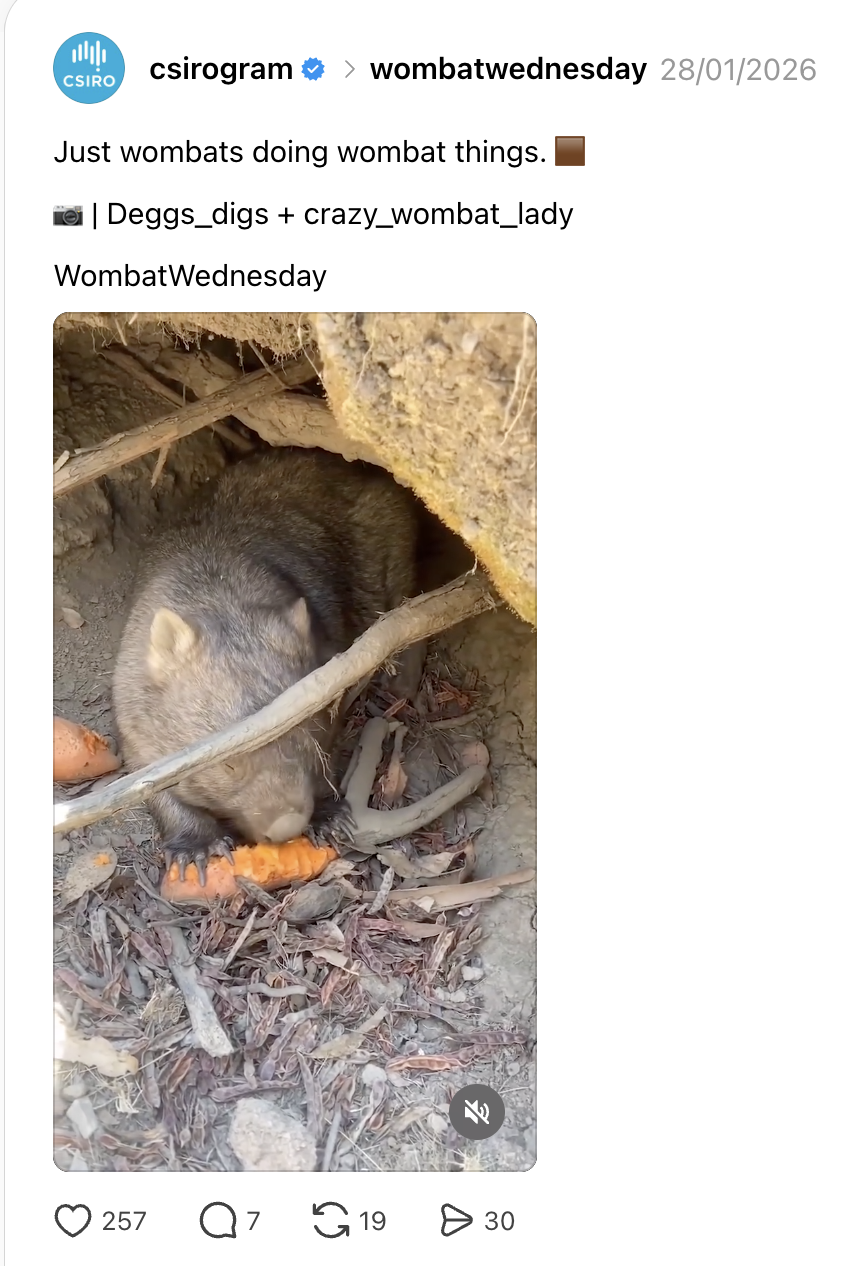

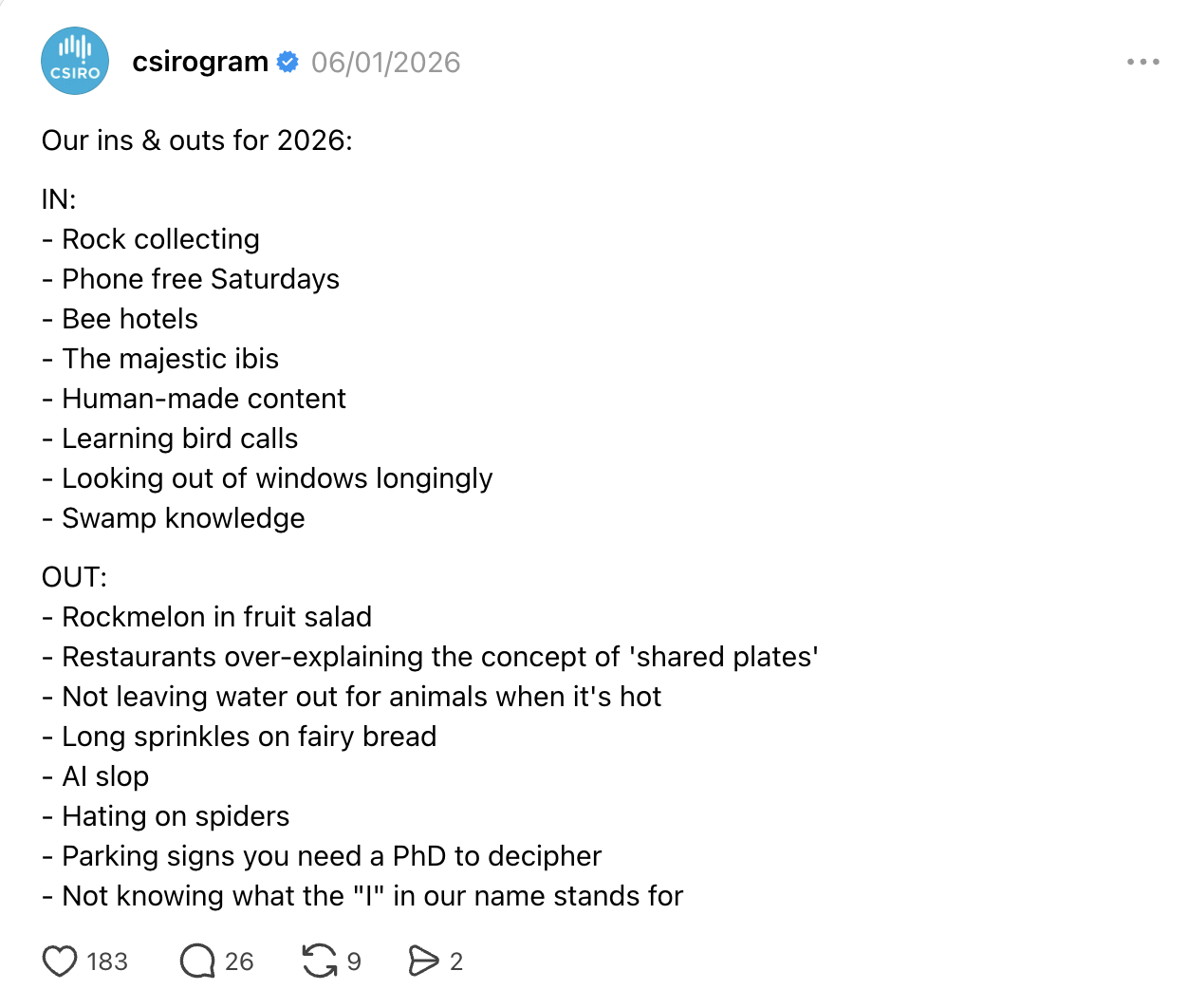
The result is content that feels native to the platform while still clearly reflecting the organisation’s voice and niche expertise.
These early experiments highlight a few emerging patterns:
Less polished, more conversational content performs well
Humour can be an effective entry point for educational objectives
Posts that invite discussion outperform broadcast messaging
This aligns with broader global trends: Threads rewards authenticity and dialogue more than highly polished content.
What Global Public Sector Accounts Are Doing
Looking overseas provides further clues about how government organisations can approach the platform.
Accounts like the Transportation Security Administration (TSA) in the United States and New Zealand Police have built strong social media reputations by leaning into personality while still delivering important public information.
New Zealand Police take a light-hearted yet composed approach, sharing behind-the-scenes moments, highlighting their canine units, and using humour to humanise the organisation.



The TSA, on the other hand, is famous for its bold and slightly “unhinged” humour. Their social media voice combines memes, witty one-liners, and tongue-in-cheek commentary with practical travel advice and security reminders.
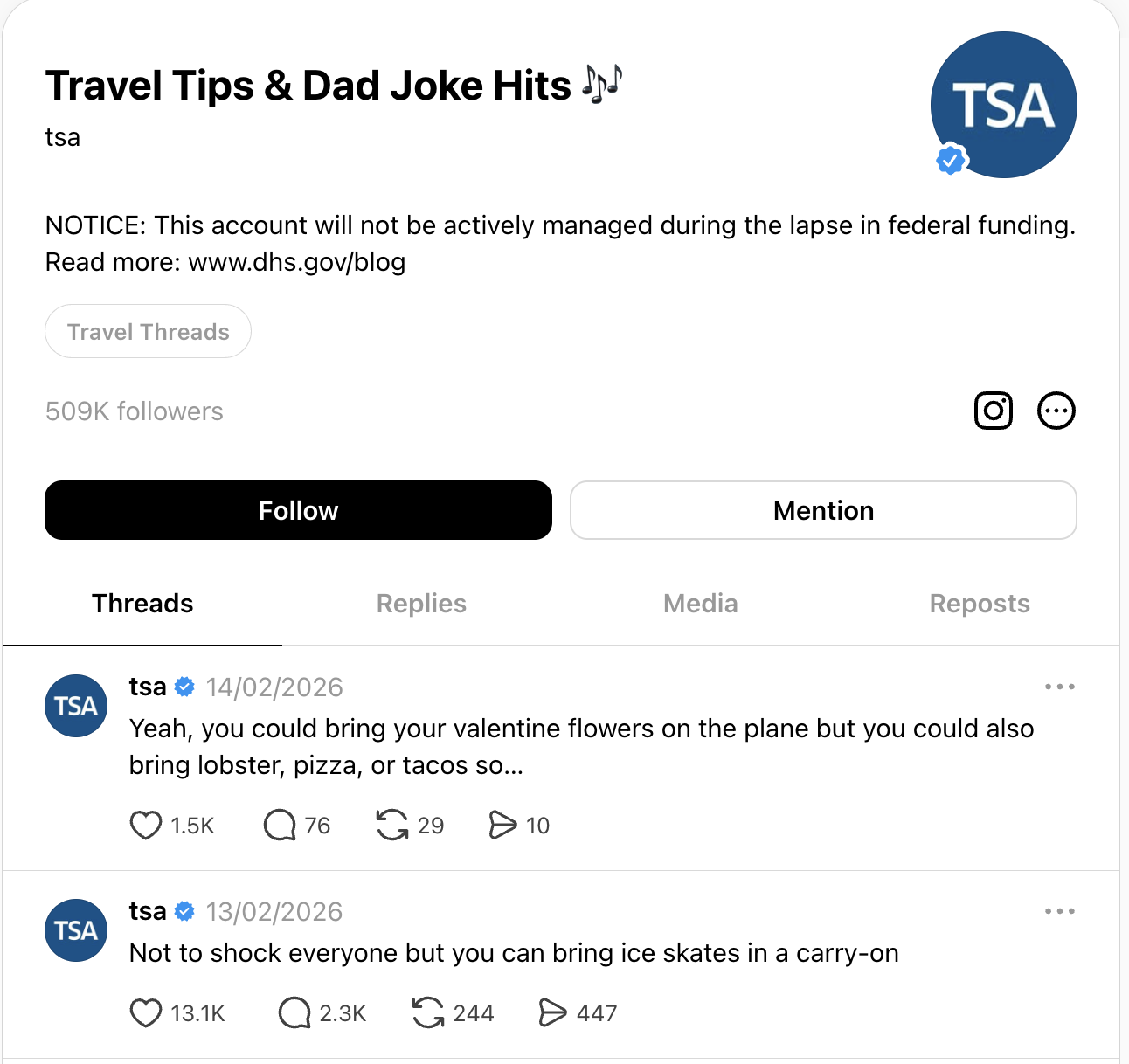
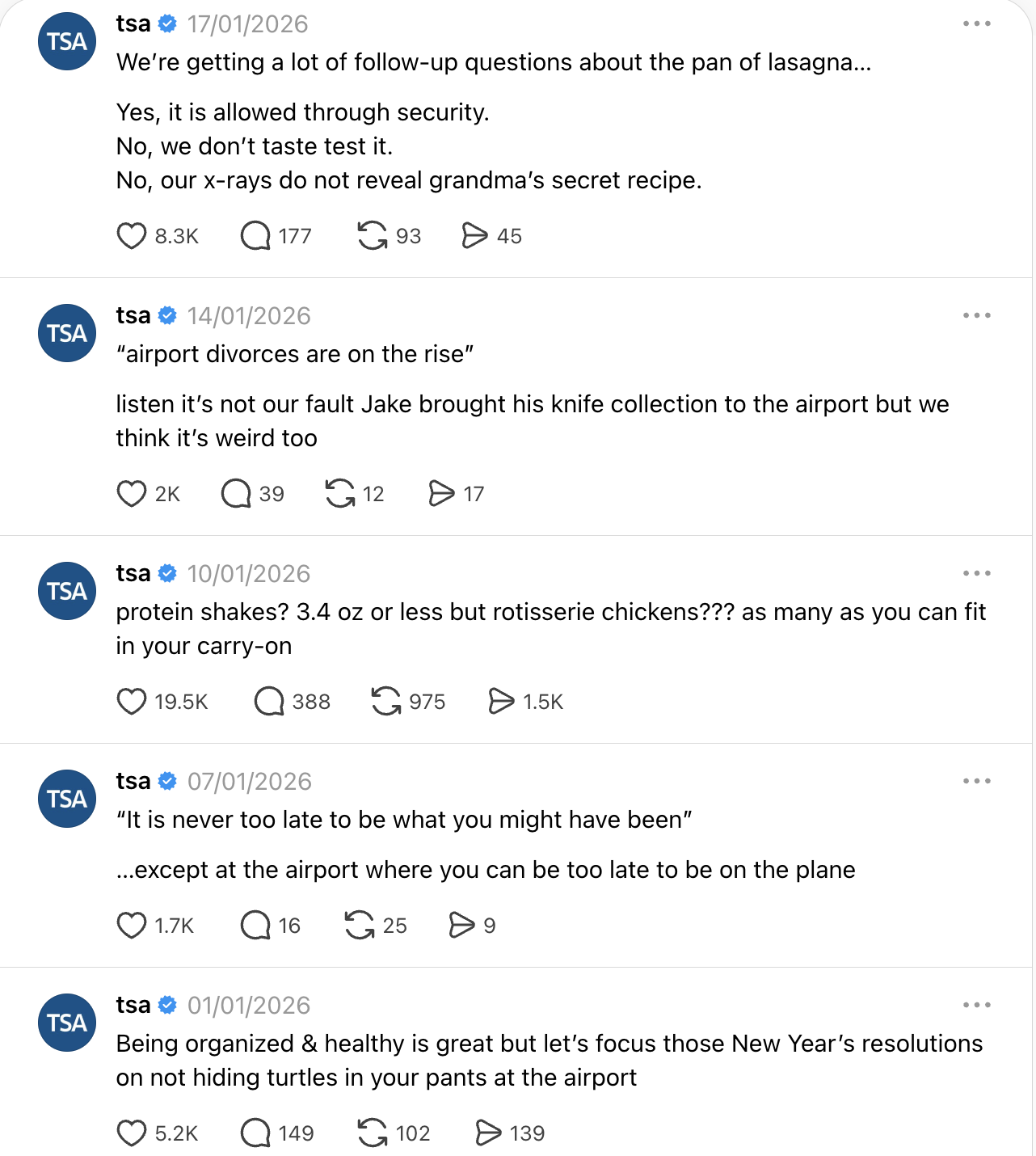
Despite their very different tones, both accounts demonstrate the same principle:
Educational content performs best when it feels human, relatable, and platform-native.
For government organisations, this presents an interesting opportunity. Threads offers space to communicate in a more human and accessible way, with lower barriers to entry as text-only posts tend to take less effort and resources to produce.
Before You Jump In: Questions to Ask
Now that you know the numbers and the platform dynamics, the next step is evaluating whether Threads makes sense for your organisation.
Here are a few questions worth asking:
Revisit Your Audience Personas
Like with any Communications activity: Start with your audiences.
Ask yourself:
Which (if any) of your target audience personas can you reach on this channel?
Are journalists, policymakers, researchers, or communities of interest active there?
Is the demographic mix aligned with your communications goals?
Not every platform needs to serve every audience.
If you’re not sure where to begin, audience persona work can provide a valuable starting point. At KINSHIP Digital, we work with organisations across government to develop evidence-based audience personas, combining research, owned audience and content analysis, and collaborative workshops to map out who your audiences are, what motivates them, and how they engage across channels.
This process helps ensure your channel strategy is grounded in real audience behaviour rather than flying blind.
Audit Your Channel Strategy
Many government communications teams are already managing a mix of platforms — from LinkedIn and Instagram through to Facebook, YouTube and X.
Before adding another channel into the mix, it’s worth stepping back and reviewing your current channel strategy.
Ask yourself:
Which channels are delivering the strongest outcomes against your communications objectives?
Where are your audiences most active and engaged?
Are there platforms that may no longer be delivering the same value they once did?
Adding a new platform should be a strategic decision – with a clear link to your communications and business objectives. A quick channel audit can help identify where there are opportunities to expand, where to double down, and where resources may be better focused elsewhere.
At KINSHIP Digital, we often support government teams with social media audits and channel strategy reviews, helping to ensure each platform plays a clear role in the broader communications ecosystem.
Align With Your Communications Objectives
Every channel should serve a clear purpose.
Before introducing Threads into your mix, consider how the platform aligns with your existing communications and over-arching organisation goals.
For example, Threads may be particularly suited to:
Quick, real-time commentary during major announcements or events
Explaining policy updates in a more short, sharp, and conversational format
Addressing misinformation or common public questions
Sharing behind-the-scenes insights that humanise government work
Or even trialing a more casual and relatable approach to social media
If your current strategy is focused heavily on visual storytelling or long-form educational content, Threads may complement those channels rather than replace them.
Consider Resourcing and Capability
Launching a new social media channel often looks simple from the outside, but in reality, it requires dedicated and consistent resourcing to maintain momentum.
Even though Threads is text-led, strong performance still relies on:
Clear, engaging copywriting
Timely responses and community management
Regular posting cadence
Content that feels native to the platform
For government teams balancing multiple channels, campaigns, and stakeholder expectations, capacity can quickly become stretched.
Before launching a new channel, it’s worth considering whether your team currently has the time, capability, and governance structures required to manage it effectively.
Review Your Marketing Technology Stack
As organisations scale their presence across multiple platforms, social media management can quickly become complex.
A centralised social media management platform — such as Sprinklr — can help teams streamline workflows by enabling:
Cross-platform scheduling and publishing
Collaborative content planning across teams
Governance and approval workflows
Centralised analytics and reporting
For government organisations in particular, where compliance, oversight, and collaboration are essential, the right tools can make a significant difference in managing an expanding channel ecosystem.
KINSHIP Digital works with government teams to design and optimise social media management workflows, ensuring they have the processes and technology needed to manage growing channel portfolios effectively. We also handle the not-so-fun, time- consuming tasks – such as implementation, on-going optimisations, and troubleshooting, so your team can focus on strategy and execution – not platform upkeep.
So… Should You Be On Threads?
The honest answer: it depends!
Threads is still evolving in Australia. It doesn’t yet offer the scale of established platforms, but it is building momentum and shaping new styles of public conversation.
For Australian Government communications teams, the most sensible approach right now may be:
Watch closely
Experiment thoughtfully
Scale deliberately if value emerges
And as your channel ecosystem grows, it may also be time to audit your social media strategy, ensuring every platform — new or old — supports clear communications objectives.
Feeling inspired? Learn how we can help you align systems, workflows, and teams — so you can turn your social data into a strategic advantage, here.